Today’s meeting was in-person and no recording is available.
Special Thank You and Offer From KidsAbility
Dear Rotary Members,
On behalf of KidsAbility, we would like to extend our sincere thanks for the incredible support Rotary Clubs continue to show within our community. Your commitment to service and giving back truly makes a meaningful difference in the lives of the children and families we serve.
We are pleased to share a special invitation with you:
Guse Productions’ Sentimental Journey 4—a high-quality musical variety show and journey through the decades featuring the songs and memories audiences know and love—is returning this May in support of KidsAbility. The production features professional performers alongside talented youth from our community.
As a small token of our appreciation, we are offering Rotary members and their guests an exclusive opportunity to attend the Friday evening performance at a preferred rate of $30 per ticket.
Friday Evening Performance (Rotary Preferred Night)
🎭 Sentimental Journey 4
📍 Location: Waterloo (WMB Church)
📅 Date: Friday May 8 (7pm)
🎟 Special Rate: $30 per ticket (regular rate: $40 Adult $35 Group)
This is a wonderful opportunity to enjoy an uplifting night of music while continuing to support a cause that aligns so closely with Rotary’s values. Many guests choose to attend with fellow members, friends, or family, making it a perfect group outing.
Tickets are limited for this special offer and will be reserved on a first-come, first-served basis.
To reserve your seats, please contact the Guse Productions Box Office:
📞 Call the Box Office: 519-502-8390 (Please mention you are with Rotary to get the pricing)
Thank you again for your ongoing support for KidsAbility. We hope you can join us for what promises to be a memorable evening!
Warm regards,
Whitney Paddock,
KidsAbility Foundation
A Better Tent City
Committee chair Neil Swayze reported that we had another very successful drive collecting much needed items for the folks at A Better Tent City. We recently delivered 165 dishes and 110 pieces of cutlery, which was very gratefully received. Our next project with A Better Tent City will be the Raised Garden Plantings on May 23, starting at 9:00 a.m. Stay tuned for mor information.
Online Auction 2026
Our Online Auction Fundraiser for 2026 is officially underway. The Tools Package has been sent out, and we ask all members review these supports and to start their soliciting. Don’t wait, start now!
Our program today was is titled Members for Life: Supporting Club Members Through Memory Changes, presented by Danielle Krisman form the Schlegel-UW Research Institute for Aging, introduced by Linda Bennett.
Danielle Krisman is the Community Relations Manager at the Schlegel-UW Research Institute for Aging. She holds a master’s degree in healthcare management and brings over 15 years of experience working with people living with dementia. At work and beyond, Danielle loves to talk about aging, delicious coffee, scenic nature walks, and creating age-friendly spaces.
Accompanying Danielle was Shira Ginsler, the Fundraising and Development Manager of the RIA.
Danielle provided background information on Dementia and suggestions on how to support club members that may be dealing with dementia. Highlights of her presentation follow:
About the RIA
Founded in 2005, the Schlegel-UW Research Institute for Aging (RIA) is a charitable, non-profit organization dedicated to advancing research and redefining aging.
Vision:
A world where research is driving innovation to enrich the journey of aging
Mission:
To enhance the quality of life and care of older adults through partnerships in research, education, and practice
Values:
Excellence, Relevance, Collaboration, Transparency, Inclusion
Why This Topic?
- As our population ages, the number of people living with dementia is expected to increase.
- Stigma and misinformation impacts how people living with dementia are treated, and how they see themselves.
- Service clubs can create supportive environments that can allow fellow club members to remain engaged as they age, even if they live with dementia
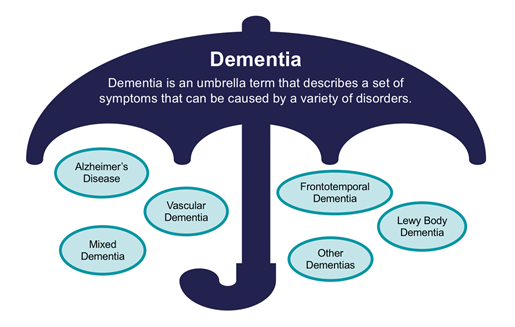
Dementia: An Umbrella Term
Dementia: More than Just Memory!
- Memory changes are often the most noticeable, but it can also impacts a person’s problem solving, judgment, language, mood and behaviour, visual and spatial awareness.
- Many types of dementia, including:
- Alzheimer’s disease - most common
- Vascular dementia
- Lewy Body dementia
- Frontotemporal dementia
The Landmark Study (2022: Alzheimer Society of Canada
2020: estimated to be over 597,000 individuals living with dementia in Canada.
2030: expected to reach close to 1 million.
- 187,000 new cases a year.
- 9.6% of the population aged 65+
The Story of Tom (Fictional but very Probable)
- Tom, 75, has been a proud member of a service club for over 25 years.
- He loves seeing his friends, being involved in the community, and feeling like he is contributing.
- Recently, Tom had trouble counting change at the pancake breakfast and notices that he’s struggling to remember the names of newer members.
- Last month, he forgot about a meeting of the sub-committee he chairs.
- Tom’s son has noticed these changes and encourages his dad to see his family doctor. Tom is eventually diagnosed with Alzheimer’s disease.
- At the appointment, the doctor ignores Tom and speaks to his son, telling him to ensure his father’s affairs are in order, and gives them a pamphlet about a day program for older adults.
- No one talks to Tom about continuing activities he loves, or staying connected to his community, or how to tell people about his diagnosis if he wishes.
Tom’s Perspective
- “If I have Alzheimer’s, there’s no way I can keep up at the club.
- I’ll just slow everything down. Time for me to call it quits and just stay home. Everyone can probably tell, but no one is saying anything because they know it’s embarrassing.
- They’ll be relieved when I stop going.”
Jim’s Perspective
- Jim and Tom have been friends through the club since the beginning.
- “Some of us have noticed Tom forgetting things and repeating himself, and he completely missed some meetings. It’s too bad, he’s always had the best ideas.
- He told us when he had prostate cancer, and we supported him. If he wanted us to know what was going on, he’d tell us.
- Better to not say anything to him.”
Factors at Play in Toms and Jim’s Decisions
- Stigma
- Stereotypes
- Lack of information, or misinformation about dementia.
- Lack of awareness of how to support people living with dementia.
- Stigma
Stigma refers to negative attitudes or treating someone differently because they have dementia.
Stigma is often unintentional, like making jokes, making assumptions, and using stigmatizing language.
It can take many forms. Stigma can also look like ignoring or excluding people from services, events, support, and opportunities.
- Stereotypes
A form of stigma, stereotypes of dementia lead to misinformation and a narrow view of what living with dementia can look like.
This shapes what we think is possible for someone living with dementia.
Oversimplified Portrayals of Dementia
Portrayals in movies, television, books lack diversity, depth, and range of experiences.
People living with dementia are usually shown as:
- elderly
- frail
- confused
- disoriented
- unreliable
- unable to make decisions or contributions
- requiring constant care and supervision
- minimal meaningful relationships in the present
- unaware of condition
3. Lack of Information or Misinformation about Dementia.
FACT – Dementia is not a part of natural aging
- Gradual changes to our brains and bodies is a natural part of aging, and everyone experiences this differently.
- About 40% of people will experience some form of memory changes as they age. For the most part, these changes are mild enough to not impact day-to-day life.
FACT – You can live well with Dementia!
“It’s my responsibility to be happy.
My job to find joy and to find reasons to smile.
I cannot accept the myth that happiness, joy, contentment, and connections are not deserved because of a diagnosis of dementia.”
Poem excerpt, by Myrna Norma, a lady with Dementia
FACT – People Under the Age of 65 can have Dementia
- Dementia is most likely to occur in those over 65.
- When symptoms of dementia start before 65, it’s referred to as “young onset dementia”.
- In Canada, there are at least 28,000 people under the age of 65 who are living with young onset dementia.
FACT – Everyone’s Experience with Dementia is Different, as are their Abilities and Needs
- While dementia IS progressive, the symptoms, level of impairment and progression of their illness will be unique to each person.
- People living in the early stages may only experience mild impairment from their symptoms, and might not need assistance.
FACT – There are Ways to Reduce Your Risk of Developing Dementia
Modifiable risk factors for dementia (meaning that they can be changed or reduced) include:
- High blood pressure
- Smoking
- Type 2 diabetes
- Obesity
- High LDL cholesterol
- Hearing loss
- Lack of physical activity
- Poor diet
- High alcohol consumption
- Social isolation
4. Lack of awareness of how to support people living with dementia.
- Benefits to supporting continued participation of club members
- Benefits to the club
- Dementia-friendly practices
Benefits of Supporting People living with Dementia as Club Members
The capabilities and potential contributions of individuals living with dementia are often underestimated.
Volunteering offers numerous benefits for the individual with dementia.
- Sense of purpose and meaning.
- Improved mood and reduced anxiety.
- Maintaining social connections, reduced isolation.
- Offers cognitive stimulation.
Continued Engagement Benefits your Club as Well!
- Continuity and reduced loss of members
- Opportunities for intergenerational connections
- Preserved historical knowledge and insights
- Ripple effect of role modelling for others who might be struggling in silence and considering leaving.
Tom’s story revised: how his Club can support him
- Jim helps create a plan for a private, respectful conversation to talk about what they’re noticing and ask Tom how to support him.
- They don’t make assumptions. Changes in abilities in one area doesn’t necessarily mean abilities have changed in another.
- They ask Tom what works for him:
- Tom is more tired in the evening, but feels great at lunchtime meetings.
- Jim calls Tom 2 hours before their meeting to remind him he’ll pick him up.
What Your Club Can Do: Training and Resources
- Training and resources suggested on handout
- Free, online training through the Alzheimer Society of Canada Dementia-Friendly Communities.
- RIA dementia programs: training modules available for both care partners, service providers, people living with dementia at dementiawellness.ca
Normalize Dementia-Friendly Practices that Support Everyone:
- Wear name tags
- Presenters use microphones
- Clear signage for bathrooms, exits, and coat rooms
- Written instructions and visual aids for tasks
- Schedule email reminders
- Notice your own assumptions and use of stigmatizing language
When Additional Support is Needed
Understand your limitations and capacity to intervene, particularly regarding:
- Safety concerns, getting lost, concerns about driving, unsafe behaviours
- Concerns about hygiene, living conditions
- Family, Ontario Health at Home (formerly known as LHIN, HCCSS)
- Suspected elder abuse and/or fraud
- Elder Abuse Ontario, local police
Wrap Up
- People living with dementia can and should continue to participate in activities they enjoy.
- There are benefits to both the individual and the Club.
- Small changes can really help people feel included and supported to remain as active Club members.
Contact Us
- the-ria.ca
- info@the-ria.ca
 Kitchener Rotary e-Newsletter